
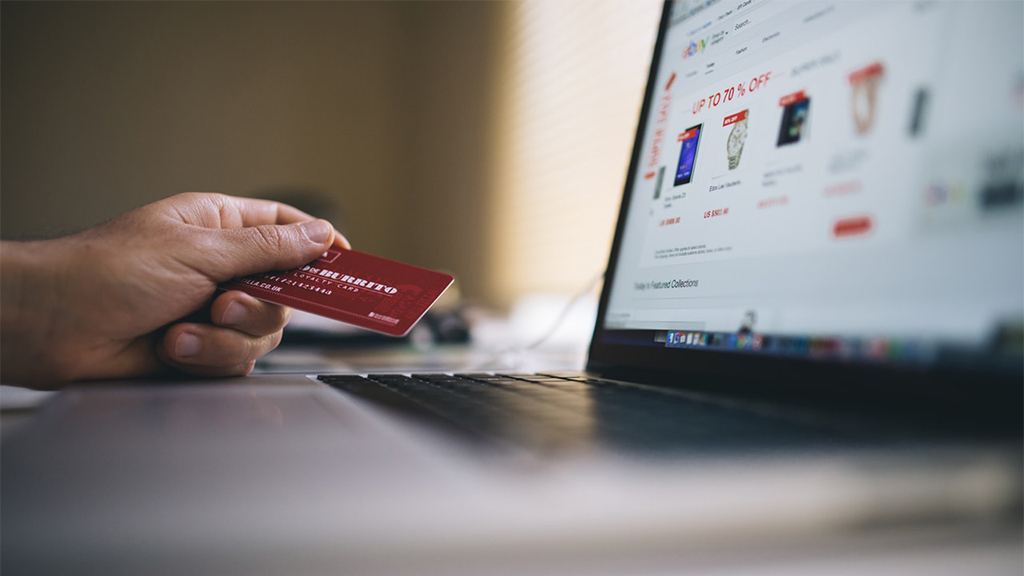
Ecommerce Websites
Think back a few years when it was not imaginable to be able to order what you want at any time of the day from your phone, smart device, laptop or pc and then take delivery in just a few hours. As consumers we now expect this as the norm, it is therefore imperative that anyone who sells any type of product or service should make sure that it can be purchased by the consumer at a time, a place, on a device and through a platform that is convenient to them. If not they will purchase from your competitor.
Ecommerce websites are designed to sell, they are an extension of your flagship website which in turn is an extension of your landing page. Think of the three separate elements – To curate interest (your landing page), to reassure, to answer questions and to sell (the main body of your website), to make it as easy as possible to complete the transaction on ANY device (the ecommerce section).
Many Ecommerce websites, whist functioning well for the pc, are not fit for purpose when it comes to smart phones let alone smart devices. That is why before ANY code is written for your website you must first understand your customer and ask how do they buy, where do they buy, what issues do they face when they are purchasing?
Ecommerce has evolved over the last few decades. Back in the 1970’s if you wanted to buy anything, then you had to walk down the high street to the nearest shop and then sometimes stand in a queue.
But all these changed in 1979, when Micheal Aldrich connected his television to a real-time transaction processing computer using his telephone line and this laid the foundation of modern ecommerce.
But before the mid-1990s, there was no online payment solution so companies were relying on the use of checks for payment and this was the major challenge to ecommerce business.
Thankfully, in 1998, Paypal was founded and this simplified the payment processes and the following year, the global ecommerce sales reached $150 billion.
Ecommerce Websites from as little as £995.00
Assist corporation can help you drive your business forward by designing and launching your very own ecommerce website. Lets discuss what will work for your business and how an ecommerce website can deliver incredible results for you.
WHAT IS ECOMMERCE WEBSITE?
On a basic level, ecommerce means shopping by the computer.The term is derived from the blend-word for “electronics” and “commerce” and it refers to any business model that involves commercial transactions that take place on the internet.So, an ecommerce website is a specialised website that is created to support ecommerce activities. Few examples include Amazon, eBay, Walmart and Alibaba.How does it work?
Typically, e-commerce website works by bringing together three different systems.
First, is the online storefront that welcomes online shoppers. It is the part of the setup people can see and interact with.
It is integrated with a payment solution gateway that verifies and accepts payment from the shoppers on behalf of the business owner.
Next is the database. It keeps a check on the items the store has in stock and constantly updates them when people make orders, including stocks that are running low and can as well, place make new orders with suppliers.
Finally, a dispatch system completes the setup. It transmits the details of the orders to the warehouse, so that the goods can be sent to the buyers as quickly as possible.
However, there are few exemptions to this 3-system setup and popular examples are dropshipping websites.
It is a type of ecommerce that doesn’t stock its products. It purchases directly from a third party supplier who equally ships the products to the customers.
Common ecommerce website models
Here are the 4 common ecommerce models practiced today.:
- B2B model: a business-to-business ecommerce is one that sells only to businesses. This type of ecommerce handles on bulk orders, as a result, their prices tends to be relatively lower. A good example is Alibaba.
- B2C model: a business-to-consumers ecommerce sells only to the consumers. They are equally known as online retailers and this type of ecommerce depends on the B2Bs for their suppliers. Examples include Amazon, Walmart.
- C2C model: a consumer-to-consumer business is one that allows a consumer to use the platform to sell their products to the other consumers. Examples are eBay and Craiglist.
- C2B model: consumer-2-business ecommerce is one that involves consumers selling to businesses. Examples of this type of business include Fiverr, Upwork and Freelancer.